


Living in a Tiny Home on Social Security: How She Did It

Gail was alone in her 1,500-square-foot townhome after her daughter moved out, and the math had stopped working. Her association dues had climbed to almost $500 a month, her property taxes were over $400, and she watched her Social Security getting eaten alive by a house she barely used. Then she started watching tiny home tours on YouTube and fell in love with the idea.
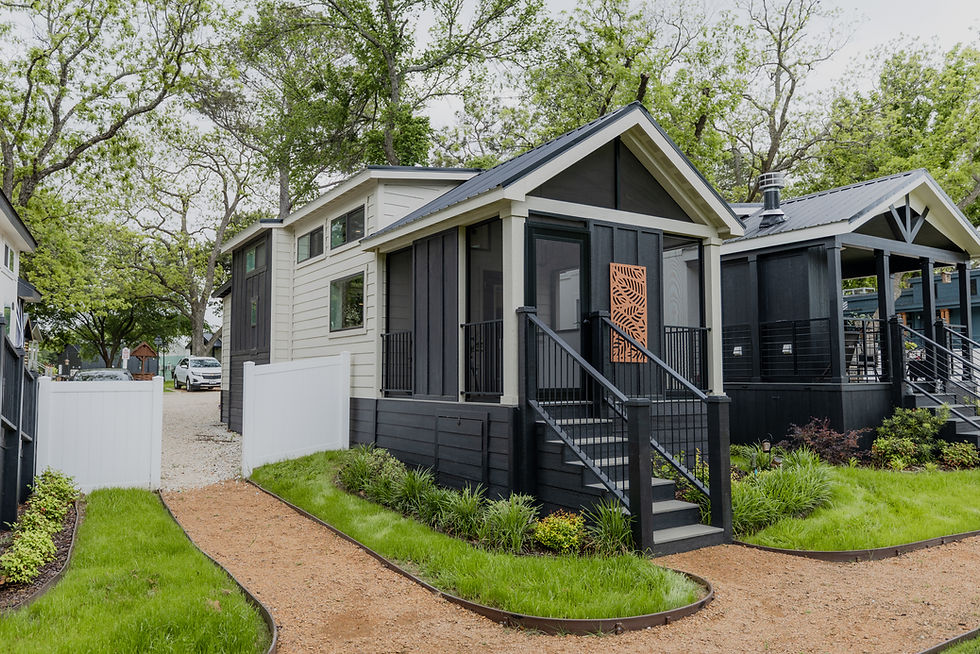
Today, she owns a 400-square-foot tiny home in a Wisconsin community, paid for in cash, with no mortgage and no property taxes. And most importantly, she's really enjoying her retirement.

The Bills That Were Eating Her Social Security
The move was not about wanting less space for its own sake. It was about the bills. Between rising HOA dues and property taxes that only ever went up, Gail could see her fixed income disappearing into a home she did not need. Downsizing was how she took that back. She sold the townhome, paid cash for her tiny home, and cut her housing costs to somewhere between a quarter and half of what she was spending in Minnesota. "I can sleep at night," she says, "not worrying about, okay, the taxes are due in four months."
Living in a Tiny Home on Social Security, By the Numbers
Here is what her month actually looks like. She paid $145,000 cash for the home, so there is no mortgage. Her lot rent is $495 a month and includes garbage, sewage, and recycling. Her gas bill, which runs a gas range and dryer, is about $10 a month. And her electric, which powers the mini split that heats and cools the whole home, peaked at about $90 during a cold Wisconsin winter. There are no property taxes at all.
All in, she is well under $1,000 a month. She points out that some friends in larger homes pay over $400 a month just for heat, and that plenty of people pay $2,000 a month in apartment rent. "I think a lot more people could live more comfortably tiny," she says.
A Kitchen She Wouldn't Redesign
The home was custom-built by its previous owner, a young woman who lived there about a year, and Gail says she could not have designed it better herself. She fell for the kitchen on sight: green cabinets with white above, soft-close doors, generous counter space, open shelving for everyday dishes, and a deep sink big enough to bathe her little dog Gus. She kept a full-size oven and range, and a clever combination washer-dryer she did not even know existed before moving in ("it is the bomb," she says). Her one regret is skipping a dishwasher, though she admits it keeps her tidy.

Storage Is Key
Gail says it more than once: in a tiny home, storage is key, and you find a use for every nook. Hers is full of smart touches. Pull-out and roll-out drawer systems bring the backs of deep cabinets within reach. A magnetic metal shelving unit fits a corner and holds hooks and small tools. There is storage built into the stairs, a hitch cover she had a local handyman build that lifts up for garden gear, and an 8 by 10 storage shed on her lot, which means she does not rent storage in town.

The Loft She Uses for Storage, Not Sleeping
The previous owner slept in the loft on a mattress on the floor. Gail, who has arthritis, did not want to climb stairs for the bathroom at night, so she made a different choice: she sleeps on a daybed in the living area and uses the loft purely for storage, like the Christmas boxes and an oversized crock-pot. She is also glad she skipped a separate bedroom. "What do you do in a bedroom besides sleep?" she says. The daybed doubles as seating, and it means no square footage sits idle during the day.

A Note From Our Sponsor, Factor
Disclosure: this video tour was sponsored by Factor.
Tiny living is about making life simpler, and Factor fits that. It delivers dietitian-approved meals that arrive fresh, never frozen, and are ready in a couple of minutes in the microwave, so there is no planning, prep, or cooking time to lose. It offers a range of diet options, including keto. Use code TINYHOMEFB50 to get 50% OFF your first Factor box plus free breakfast for 1 year at https://bit.ly/3SolSJk !
Why She Chose This Community
When Gail searched, she assumed she would have to move south to Tennessee or Kentucky, where tiny home communities are common. On a whim she searched closer to home and found Tiny Timbers in Wisconsin, with farming space, an orchard, and chickens that took her straight back to growing up on a Wisconsin farm. She chose her particular home partly because it is 10 feet wide, where many in the neighborhood are only 8, and partly for the community itself. "There's a lot of single women living out here and everyone helps each other out," she says. After telling herself 30 years ago that her townhome would be her last home, she now calls this one her forever home.

Her Advice
Gail's advice is simple: do your homework. Watch the tours, look at the models, join the community groups, and really research before you buy. Her larger point is the one she keeps coming back to. A lot more people, she believes, could trade a $2,000 apartment or a house that eats their retirement for a tiny home they can actually afford, and live better for it.
FAQ
Can you live in a tiny home on Social Security? Gail does, comfortably. After paying cash for her tiny home, her only housing costs are $495 a month lot rent (including garbage, sewage, and recycling), about $10 a month for gas, and up to $90 a month for electric in a cold Wisconsin winter, with no property taxes. Her total runs well under $1,000 a month, roughly a quarter to half of what she spent on her old townhome.
How much does it cost to live in a tiny home per month? For Gail, under $1,000 a month all in: $495 lot rent plus about $10 for gas and up to $90 for electric, and no property taxes. She contrasts that with friends in larger homes paying over $400 a month just to heat, and with the $2,000 apartment rents she says many people pay instead.
Is a tiny home community good for a single retired woman? Gail thinks so. Her Tiny Timbers community in Wisconsin is home to many single women who help each other out, which she describes as a real community. The low upkeep, the safety of neighbors nearby, and the low cost let her live independently on Social Security, and she calls it her forever home.
Do you need a separate bedroom in a tiny home? Not necessarily. Gail deliberately chose not to have one. She sleeps on a daybed in her living area, which doubles as seating for guests during the day. She sees a dedicated bedroom as wasted space, since, as she puts it, what do you do in a bedroom besides sleep.
How do you heat a tiny home in a cold winter? Gail heats and cools her Wisconsin tiny home with a single mini split. Even through a cold winter, her electric bill topped out around $90 a month, which she notes is a fraction of the $400-plus some friends pay to heat larger homes. A well-built, well-insulated tiny home holds its temperature well; she says she does not even hear the wind in a storm.
Community: Tiny Timbers Agrihood https://bit.ly/TinyTimbersAgrihood
Join the Tiny Home Tours newsletter for one real story like this every week: https://bit.ly/THT-Newsletter
More Tiny Home Tours to Explore
Doing the rent-versus-own math yourself? Here is the honest breakdown: Tiny Home vs Apartment: The Real Cost and Lifestyle Comparison
Another couple who made a fixed income work in a tiny home: Can You Retire Comfortably in a Tiny Home on a Fixed Income?


Comments