


Off-Grid Tiny Home in Alaska: A Family of Six, Mortgage-Free

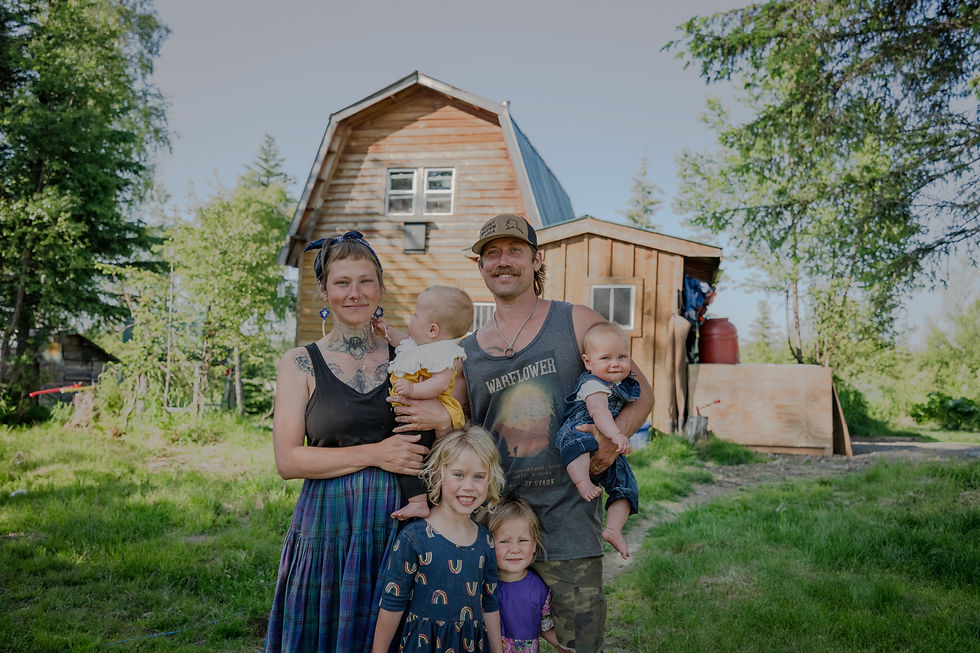
Bob and Savannah Stark live on 20 wooded acres on the Kenai Peninsula in South Central Alaska, in an 835 square foot off-grid tiny home they share with their four children. There is no power line to the house, no mortgage, and no neighbor in sight. "Now that we have a tiny home, it is our sanctuary," Bob says. This is how a family of six actually lives off-grid, from where the heat comes from to how they paid for the land.
The Moment That Planted the Seed
Bob traces the whole idea back to a single experience. In 2003 he parachuted into northern Iraq during the invasion, and a couple of months later found himself guarding long lines of people waiting for water, propane, and food. "I really didn't ever want to be in that situation," he says, "of waiting for handouts and not having your own land to provide for you." He was 18. The seed took years to grow, but it never left him, and it eventually pointed him back to his home state and a patch of land of his own.
Buying 20 Acres, and Owning It Free and Clear
In 2012 Bob bought the property for $80,000: 20 acres plus an unfinished 680 square foot house with a well and a septic system. "I could have bought probably an eighth of an acre for what I paid for 20 acres," he says. The land was cheaper precisely because it was off-grid, roughly half the price of comparable on-grid lots down the road.
The financing was deliberate. It was for sale by owner and owner-financed. Bob put 20 percent down from savings, which left a payment of about $540 a month, and his roughly 40 percent VA disability rating from his military service covered almost exactly that. "I didn't want a mortgage that was any higher than that disability," he explains, so he could spend his time writing and growing food instead of chasing a bigger payment. They have since paid it off entirely. "We're mortgage free," Savannah says. While friends work two jobs to cover an $1,800 or $2,500 monthly mortgage, the Starks talk about how much freedom they feel instead.

How This Off-Grid Tiny Home Actually Works
Living without utility lines means every system is one you build and maintain yourself. Here is what keeps the Stark home running through an Alaskan year.
Two Heat Sources for an Alaskan Winter
Bob learned young that every Alaskan family should have two heat sources, so they run a wood stove as the primary heat and a diesel Toyo stove as a backup. An old steel stove handed down from family also heats their water in two big pots. The heat rises and collects upstairs, which was fine until a nursery moved up there, so they now lean more on the steadier diesel heat.
Water From a Well and the Sky
A well pumps water up to a 300-gallon gravity tank, which feeds the house by drip. They supplement with rainwater collected off the gutters into barrels, used for the garden, the chickens, the dogs, and everyone else, and they filter drinking water through a countertop filter. There is a septic toilet and an outhouse, a small washing machine a family member gifted them after their first child, and no dryer, so laundry hangs on lines inside and on the railings. For a bath, they heat water on the wood stove and pour it into the tub.
Power From Five Panels and a Generator
The electrical system is modest and growing. Five 100-watt solar panels feed a bank of eight 6-volt batteries through an inverter and charge controller, with a Honda 2200-watt generator filling the gaps. Cold was the enemy at first, since the generator struggled when its oil thickened, until they moved it into a small shed where it stays warm. As the family grows and uses more power, Bob is building a bigger panel stand to expand the system.

A Kitchen That Feeds Six
"It is the heart of our home," Bob says of the galley kitchen, and it has evolved a lot. When he proposed, Savannah said yes on one condition: that they get a refrigerator, because until then Bob had lived with a candle and a propane burner and no electricity at all. Now a full-size fridge, a propane oven, and a well-loved baker's table anchor a space where they process salmon, cook baby food, and bake sourdough. They keep the counters clear by living minimally, one plate, one fork, one spoon, and one bowl per family member, and stash the overflow in a shipping container out back. The dining table is one they built together from barn wood Bob salvaged, recut board by board after he measured wrong the first time. "Nobody knows that besides us now," he laughs.

What the Quiet Gave Back
Bob is open about why this life matters so much to him. Before he moved out here, he says plainly, he was struggling with addiction. Trading the flip of a switch for hauling water and splitting wood brought his days back to simple, physical things, and that simplicity, he says, "provided me the opportunity to heal in ways that I didn't even know I needed." He credits it with helping him become the husband and father he is now. Of everything off-grid living has given him, he lands on two things: present-moment awareness, and time with his family.
What the Starks Would Tell You
Off-grid can be the affordable option, not the expensive one. Their land cost about half the on-grid price, and matching the payment to guaranteed income kept it stress-free.
Build in redundancy. Two heat sources, a well plus rainwater, solar plus a generator. In a place like Alaska, the backup is the point.
Small footprint, big storage discipline. One place setting per person and a shipping container for overflow is how six people share 835 square feet.
FAQ
What does an off-grid tiny home need to run? The Starks' off-grid tiny home runs on a wood stove with a diesel backup for heat, a well plus rainwater collection and a gravity-fed tank for water, and five 100-watt solar panels, a battery bank, and a Honda 2200-watt generator for power. Extra storage lives in a shipping container on the property.
How much does off-grid land cost in Alaska? Bob Stark bought 20 acres with an unfinished 680 square foot house, a well, and a septic system for $80,000 in 2012, owner-financed with 20 percent down at about $540 a month. He notes that off-grid land on his road cost roughly half what comparable on-grid land did.
Can a family live off-grid in a tiny home? Yes. The Stark family of six lives in an 835 square foot off-grid home on the Kenai Peninsula in Alaska. They manage it with heavy use of built-in storage, a shipping container for overflow, and a minimalist rule of one plate, fork, spoon, and bowl per person.
How do you get water in an off-grid home in a cold climate? The Starks pump well water up to a 300-gallon gravity tank, collect rainwater in barrels off the gutters, and filter drinking water through a countertop filter. For baths, they heat water on the wood stove and pour it into the tub.
How do you heat an off-grid home in Alaska? Bob's rule is that every Alaskan family should have two heat sources. The Starks heat mainly with a wood stove and keep a diesel stove as backup. Because heat rises and the upstairs gets very warm, they now rely more on the steadier diesel stove, since one of the bedrooms up there is a nursery.
Want to follow the Starks' off-grid journey? You can connect with them here:
YouTube: @secretgardenalaska
Website: SecretGardenAlaska.org
Facebook: Robert Stark
Join the Tiny Home Tours newsletter for one real story like this every week: https://bit.ly/THT-Newsletter
More Tiny Home Tours to Explore
For another take on self-reliant, no-mortgage living on the move, meet a retired couple who built out a school bus: School Bus Tiny Home: A Retired Couple's No-Mortgage Life
Thinking about land and off-grid systems yourself? Start here: How to Start Living in a Tiny Home: A Buyer's Roadmap


Comments