


Life in a Tiny Home Community: How One Couple Fell for It

Updated: Aug 17
Ben and Cheryl only came to look at tiny homes because their daughter wanted to. Ben will be the first to tell you he had absolutely no interest. Then, over lunch that same day, he looked at Cheryl and said, "We could buy one as an investment." Before they headed home, they had already made an offer.
"We bought this tiny home as an investment," Cheryl says. "And we just love it so much we decided to sell our big house and move here full-time."
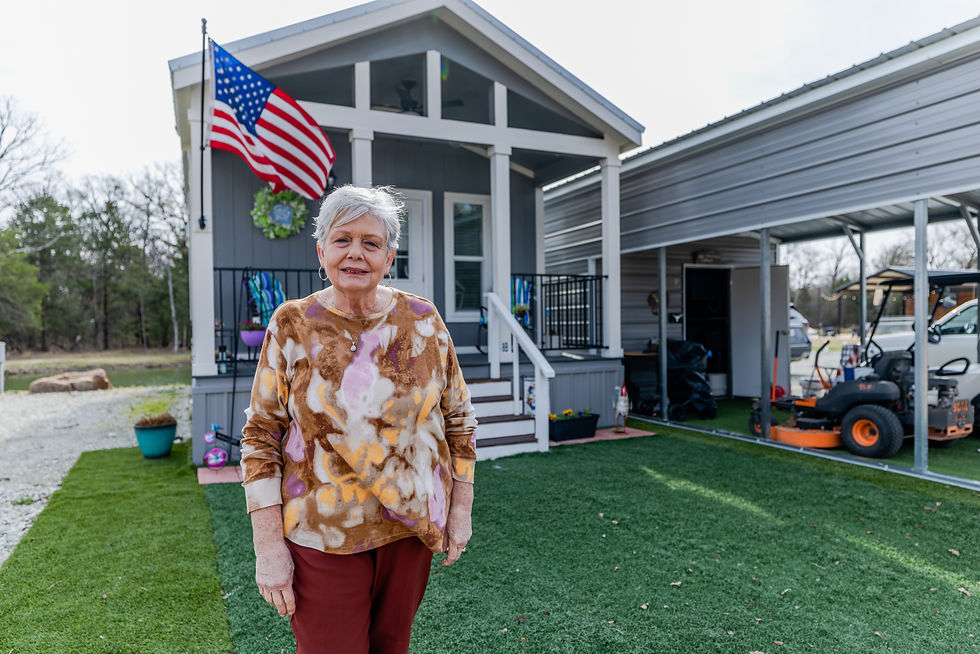
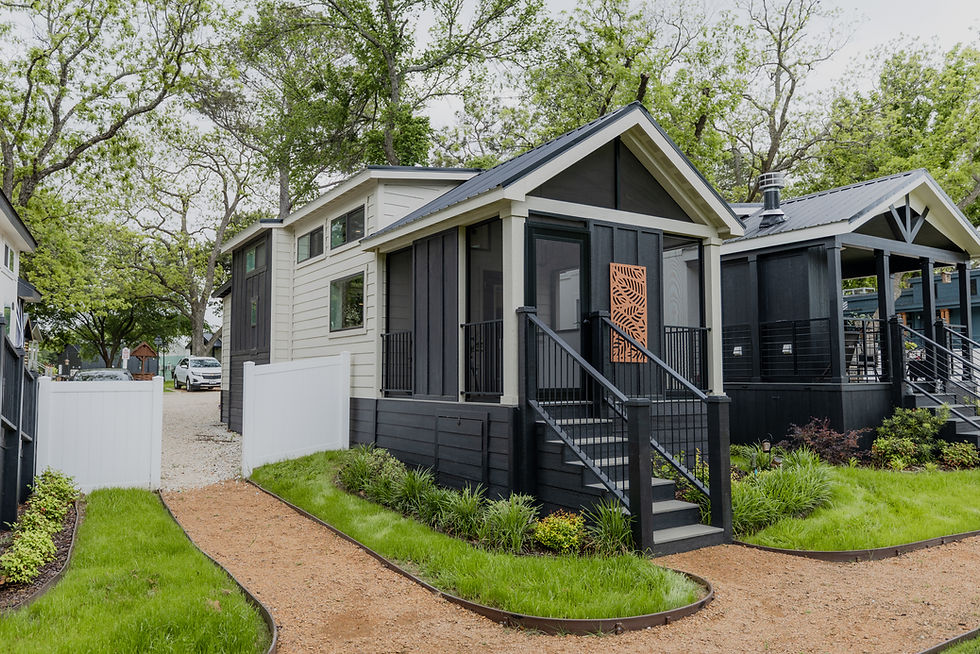
After 36 years of marriage, Ben and Cheryl are now retired and living full-time in a 543-square-foot Clayton Homes park model at the Simple Life community in Flat Rock, North Carolina. What started as an investment became a lifestyle they never expected to love.

From Investment to Home
The decision happened fast, and it nearly did not happen at all. Another buyer had asked the salesman if she could "sleep on it." Ben and Cheryl signed the papers that afternoon. When the other woman called that night to say yes, it was too late. "You can't sleep on it," Cheryl laughs. Ben, who never pictured himself as a tiny house person, puts it simply: "I have found out that this is the life that I want to live."
A U-Shaped Kitchen She Swore She'd Never Have
Cheryl was determined not to buy a tiny home with a U-shaped kitchen, because she thought she would feel cornered. Now it is the only kind she would ever want. "I can just turn around to the stove or to the sink," she says. She swapped in an induction cooktop, partly for counter space and partly because research told her to avoid gas in a tiny home, and she will not go back.
The best part is the storage detective work. Convinced there was wasted space under the counter, Ben took a saw to it and found a hidden cavity big enough for a bank of drawers. Inside it, left behind from the build, were a half can of deodorant, a soda, and an empty paint bucket. "I was hoping for some money," Cheryl says, "but we didn't find any money." They also swapped the pantry door, which blocked the hallway, for a curtain, and turned a blocked-in cabinet into porch storage.

Two Bedrooms, and a Snoring Confession
This is a two-bedroom home, and Ben and Cheryl sleep in separate rooms, which comes with one of the best stories in the tour. Cheryl blamed Ben's snoring for years. Then one night it was so loud she rolled over to wake him and realized he was not even in the bed. "Lo and behold, I was the person snoring." Now they both own it, and both sleep better apart.
Ben's room doubles as a museum for the NASCAR memorabilia he has collected since attending his first Daytona 500 in 1962. Cheryl's has French doors to the porch, a custom wardrobe, and a shoe cabinet she scored through the community's yearly giveaway program, where neighbors set unwanted items on the street for anyone who wants them. Her grandson got a full set of golf clubs the same way.
The Porch They Actually Live On
If there is one feature Cheryl loves most, it is the screened porch, which she calls an extension of the living room. She and Ben painted every storage cabinet out there the same color as the house so the space reads bigger. When the weather cooperates, which is most of the year at 2,100 feet of elevation, they eat breakfast, lunch, and dinner outside, and neighbors drift over for coffee in the morning or a glass of wine at night.

What It Costs
Cheryl is honest that tiny homes are not the bargain they once were. She remembers when you could get one for $40,000; they paid about $183,000 for this one and have put roughly $10,000 into it since. "This is our life and this is where we live," she says, "and we want it to be as comfortable and beautiful as we can make it." Their monthly community fee runs about $700, which she estimates is roughly half property taxes and maintenance and half the lifestyle, covering the yard, garbage, water, and cable.
What Tiny Home Community Living Is Really Like
This is the part Ben and Cheryl keep coming back to, and it's the real reason they stayed.
Their home is essentially turnkey. The community takes care of the mowing and exterior maintenance, so when they spent a month in Europe last summer, they simply locked the door and left. When they came home, the yard looked just as they had left it.
"To me that's worth a lot," Cheryl says.
But it's more than just the maintenance. It's the people.
Just two weeks after they moved in full-time, Hurricane Helene knocked out power and phone service for days. The clubhouse ran on a generator, neighbors brought food to cook and share, and everyone looked out for one another. People check in when someone is sick, bring meals, and even walk each other's dogs.
What Cheryl appreciates most is that no one expects you to participate. "If you want to be part of the community, you go up and you get involved. If you don't, you can live in your tiny home and be just as introverted as you want to be."
She often compares it to the alternatives. "I can't imagine being stuck in an apartment or a condo and not even knowing your neighbors."
Their Advice
Ben and Cheryl say they plan to live tiny "until we have to be carried out." When they toured a beautiful 1,900 square foot house nearby, Cheryl felt lost in it and could not imagine cleaning all that space. For anyone even thinking about this life, her advice is refreshingly low-pressure: "Just go for it, and at least rent one. There's quite a few to rent and try it, because it's awesome."
FAQ
What is it like to live in a tiny home community? For Ben and Cheryl at the Simple Life community in Flat Rock, North Carolina, it is turnkey and social. Maintenance, yard, trash, water, and cable are handled, so they once locked the door and spent a month in Europe with nothing to worry about. Neighbors check on each other, and when Hurricane Helene knocked out power, the community ran a generator at the clubhouse and shared meals.
What does the HOA or lot fee cover in a tiny home community? In Ben and Cheryl's community it is about $700 a month, and Cheryl says roughly half goes to property taxes and maintenance and the rest to the community lifestyle. It covers the yard, garbage, water, and cable, plus shared amenities, which is why they describe the setup as turnkey.
Can you buy a tiny home as an investment? Ben and Cheryl originally bought theirs as an investment, then loved it so much they sold their big house and moved in full time. Many tiny home communities also allow rentals, and Cheryl's advice to anyone curious is to rent one first and try the lifestyle before buying.
How much does a tiny home in a community cost? Ben and Cheryl paid about $183,000 for their 543 square foot, two-bedroom home and have put roughly $10,000 into it since. On top of the purchase, their monthly community fee runs about $700 and covers taxes, maintenance, and utilities like water and cable.
Is a tiny home community good for retirement? Ben and Cheryl, both retired, make the case that it is. The home and yard are low maintenance, the community handles the upkeep so they can travel freely, and neighbors look out for one another. Cheryl contrasts it with apartment or condo living where, she says, people often do not even know their neighbors.
Builder: https://bit.ly/claytonhomestht
Community: https://bit.ly/SimpleLifeCommunity
Join the Tiny Home Tours newsletter for one real story like this every week: https://bit.ly/THT-Newsletter
More Tiny Home Tours to Explore
Weighing community living against renting? Here is the honest breakdown: Tiny Home vs Apartment: The Real Cost and Lifestyle Comparison
Another couple who downsized into a community for the years ahead: A Tiny Home for Aging in Place: How One Couple Downsized

Comments